









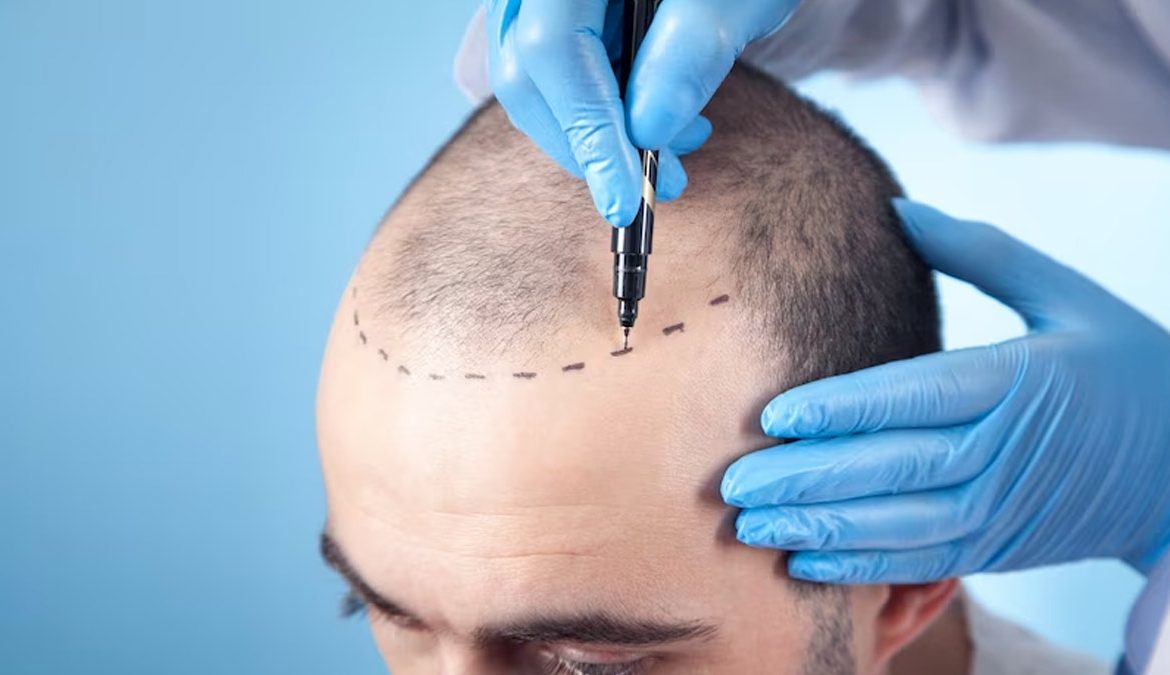
HAIR TRANSPLANT
Today, hair loss is an important problem seen not only in later ages but also in early ages. Although it usually begins to appear in the twenties of men, it is not uncommon to see it in women. Hair loss begins with thinning of the hair or regression of the front line of the hair. In general, the cause of hair loss is genetic in men and hormonal in women, sometimes it can be seen due to various diseases. People with hair loss complaints should find out whether there is any disease that has a side effect of hair loss.
When it is determined that hair loss is caused by disorders such as hormonal problems or vitamin mineral deficiency, it should first be treated for these disorders. If hair loss continues after the necessary treatments are applied or if there is an irreversible hair loss, hair transplantation can be applied to these people. Hair transplantation can be applied to people aged 22 years and over if they need it ethically today. For this reason, people aged 22 and over with hair loss problems can have hair transplantation.
The most common methods for hair transplantation today are FUE and DHI methods.
Sapphire FUE Method
Sapphire FUE method is an innovative application method for hair transplantation and today this method is frequently used, which makes it possible to transplant chest and back hair. In this technique, a micro motor is used, since these tips are 0.6 – 0.7 mm, there is no scar on the back of the neck or where the hair follicles are taken, and the patient feels much less pain after the operation. The patient does not feel any pain or ache during the operation due to the local anaesthesia applied to the patient before the operation.
The FUE method consists of several steps. Firstly, the patient’s hair is cut up to 1 mm so that the follicles can be detected and the area to be transplanted can be seen more clearly. The chest, back or nape area, which is the area to be used for hair follicles, is shaved up to 1mm. Afterwards, local anaesthesia is applied to the area to be treated so that the patient does not feel pain.
In order to reveal the hair follicle, the micro motor tip is inserted into the scalp and the hair is removed together with the surrounding tissue and follicle. This structure is called “graft”. The extracted hair follicles are kept in a special solution until transplantation to prevent any damage.
Depending on the adequacy of the donor area and the width of the area to be transplanted, approximately 1000-2800 grafts, i.e. 2500-7500 hair strands can be transplanted in one session in the FUE technique. The patient’s hair structure and the direction of hair growth are taken into account during the procedure and it is aimed that the hair takes its natural form after the procedure. After the transplantation process is completed, the area where the operation was performed is dressed and the patient is discharged.
DHI METHOD
Another hair transplantation method that has recently become widespread is DHI hair transplantation. DHI method is also called unshaven hair transplantation method. As the name suggests, this method does not require shaving the hair. The purpose of this method is to make a more frequent and more natural hair transplantation by focusing on the openings in areas with sparse hair without damaging the existing hair. In DHI method, the hair reaches its natural appearance more quickly and the patient can return to his/her daily life earlier.
The area to be transplanted and the donor area are analysed in a computer environment with a high-resolution camera before the transplantation process. The purpose of the analysis is to determine the hair type, hair loss intensity, the density of the area to be transplanted and the amount of follicles that can be taken. According to the results of the analysis, some hair is cut and the design of the area to be transplanted is created. Afterwards, local anaesthesia is applied to the area and the nape area is numbed so that the patient does not feel pain. Afterwards, hair follicles are taken with micro tips and kept in a special solution to prevent damage. After the root extraction process from the donor area is finished, local anaesthesia is applied to the area where the transplantation will be performed.
After anaesthesia, the grafts start to be transplanted with micro-tips from the front of the designed area to the sparse areas in accordance with the natural structure and direction of hair growth. The aim of the DHI method is to plant new hair by protecting the existing hair and the process is completed without any damage to the existing hair. This method


 Google Übersetzer